
Evangelical Christian wedding manuals offer invaluable guides for ceremonies steeped in faith, love, and meaning, assisting ministers and couples alike.
What is an Evangelical Christian Wedding?
An Evangelical Christian wedding is a sacred rite celebrating the union of two individuals before God and their community, establishing marriage as a blessed alliance sustained by divine grace. More than a legal contract, it’s a sacrament reflecting Christ’s love for the Church.
These ceremonies emphasize biblical foundations, with scripture readings being indispensable, highlighting the Word of God as the source of life. It’s a solemn occasion filled with gratitude, poetry, and, most importantly, the proclamation of God’s word.
The focus is on a commitment rooted in faith, seeking God’s blessing and guidance for a lifelong partnership. It’s a public declaration of love, fidelity, and a shared devotion to Christian principles.
The Significance of Biblical Foundations
Biblical foundations are paramount in Evangelical Christian weddings, establishing the ceremony’s spiritual core and guiding principles. The Word of God isn’t merely present; it is the foundation upon which the marriage is built, offering strength and direction.
Scripture readings, particularly those emphasizing love, commitment, and faithfulness, are integral. Passages illuminate God’s design for marriage, portraying it as a holy covenant. This emphasis underscores that the union isn’t simply a human agreement but a sacred bond blessed and ordained by God.
The ceremony’s structure and vows are often directly derived from biblical teachings, reinforcing the couple’s commitment to a life lived according to God’s will.

Pre-Wedding Counseling and Preparation
Pre-wedding counseling is crucial, offering guidance and support as couples build a strong, faith-based foundation for lifelong commitment and shared values.
The Role of the Pastor
The pastor’s role within an Evangelical Christian wedding is profoundly significant, extending far beyond simply officiating the ceremony. They serve as a spiritual guide, offering pre-marital counseling rooted in biblical principles to ensure a strong foundation for the couple’s future. This involves facilitating open communication about expectations, finances, conflict resolution, and faith integration within the marriage.

Furthermore, the pastor provides pastoral care, offering emotional and spiritual support throughout the engagement and beyond. They lead the couple in prayer, helping them discern God’s will for their union. During the ceremony, the pastor’s invocation and blessing carry immense weight, symbolizing divine approval and guidance. They are responsible for ensuring the ceremony reflects the couple’s faith and values, creating a sacred and meaningful experience for all involved.
Pre-Marital Counseling Topics
Effective pre-marital counseling, central to Evangelical Christian weddings, delves into crucial areas for lasting commitment. Discussions encompass communication styles, identifying and navigating potential conflict constructively, and establishing shared goals for the future. Financial management is a key topic, addressing budgeting, debt, and financial transparency.
Faith integration is paramount, exploring how spiritual beliefs will shape their marriage and family life. Expectations regarding roles, responsibilities, and intimacy are openly discussed. Counselors also address family dynamics, including relationships with in-laws and establishing healthy boundaries. Importantly, counseling reinforces the biblical understanding of marriage as a covenant, emphasizing commitment, forgiveness, and unconditional love, preparing the couple for a lifetime together.
Importance of Parental Blessing
Within the framework of Evangelical Christian weddings, seeking parental blessing holds significant weight, rooted in biblical principles of honor and respect. Traditionally, a couple’s marriage is viewed not merely as a union of two individuals, but as the joining of two families; Obtaining parental approval demonstrates humility and acknowledges the wisdom and experience of those who have nurtured them.
This practice fosters a supportive network, strengthening family bonds and laying a foundation of unity. While not always possible or advisable in every situation, actively seeking and valuing parental input is encouraged. It symbolizes a willingness to embrace guidance and build a marriage grounded in familial support, reflecting a commitment to honoring both God and their parents.

The Wedding Ceremony Structure
Traditional Evangelical Christian weddings are sacred rites celebrating union before God and community, establishing marriage as a divinely blessed covenant.
Processional and Welcome

The processional marks the ceremonial beginning, typically with the wedding party—bridesmaids and groomsmen—proceeding to their places. Traditionally, the bride is escorted by her father, symbolizing the transfer of responsibility and blessing.
Music during the processional often sets a reverent and joyful tone, frequently incorporating hymns or contemporary Christian songs. Upon reaching the altar, the officiant extends a warm welcome to the gathered guests, acknowledging the significance of witnessing this sacred commitment.
This welcome often includes a brief statement about the purpose of the ceremony – to celebrate the love between the couple and to seek God’s blessing upon their new life together. A heartfelt acknowledgement of the support from family and friends is also common, recognizing their role in the couple’s journey.
Invocation and Opening Prayer
Following the welcome, the pastor or designated leader offers an invocation, a formal call to God’s presence. This moment establishes the sacred nature of the ceremony, acknowledging God as the central figure in the couple’s union.
The opening prayer typically expresses gratitude for the love shared between the couple, asks for blessings upon their marriage, and seeks guidance for their future together. It’s a moment of collective reverence, inviting guests to join in prayerful support.
Prayers often reference biblical principles of marriage, emphasizing commitment, faithfulness, and mutual respect. The prayer may also specifically ask for strength to overcome challenges and for wisdom in navigating life’s journey as a married couple, firmly rooted in faith.
Scripture Readings
Scripture readings are a cornerstone of Evangelical Christian wedding ceremonies, underscoring the biblical foundation of marriage. These passages illuminate God’s design for husband and wife, offering guidance and inspiration for a lifelong commitment. The selection of readings is deeply personal, reflecting the couple’s shared faith and values.
Readings emphasize love, respect, forgiveness, and unity. They serve as a reminder that marriage is not merely a human institution, but a sacred covenant ordained by God. The chosen verses often speak to the beauty of selfless love and the importance of prioritizing one another.

The readings are delivered with reverence, often by close friends or family members, adding a personal touch to the ceremony.
Common Biblical Passages for Weddings
Several biblical passages are frequently chosen for Evangelical Christian weddings due to their profound message of love and commitment. 1 Corinthians 13:4-8, often referred to as the “love chapter,” beautifully describes the qualities of enduring love – patient, kind, and selfless. Genesis 2:18-24, recounting the creation of Eve, highlights the complementary nature of husband and wife and the institution of marriage itself.
Ecclesiastes 4:9-12 emphasizes the strength found in unity and companionship. Ephesians 5:21-33 provides guidance on mutual submission and the husband’s sacrificial love for his wife. Song of Solomon 8:6-7 celebrates the passionate and unwavering nature of true love. These verses collectively paint a picture of a marriage rooted in faith, devotion, and mutual respect.
Worship Through Music
Music plays a central role in Evangelical Christian weddings, serving as a powerful expression of worship and devotion. The selection of songs should reflect the couple’s faith and commitment to God. Hymns, with their rich theological depth and traditional melodies, are often included, creating a sense of reverence and continuity with Christian heritage.
Alongside hymns, many couples choose contemporary Christian songs that resonate with their personal experiences and beliefs. These songs often feature uplifting lyrics and modern arrangements, appealing to a wider audience. The music chosen should enhance the spiritual atmosphere of the ceremony, leading guests and the couple into a time of heartfelt praise and adoration.
Hymns and Contemporary Christian Songs
Hymns offer a timeless expression of faith, often chosen for their profound theological messages and historical significance within the Christian tradition. Classics like “Amazing Grace” and “How Great Thou Art” frequently appear, fostering a sense of unity and reverence. Selecting hymns that speak to the commitment of marriage—love, faithfulness, and God’s blessing—is key.
Contemporary Christian songs provide a modern alternative, resonating with couples seeking a more current musical style. These selections often feature relatable lyrics about love, commitment, and God’s presence in relationships. Blending both hymnody and contemporary worship creates a dynamic and inclusive musical experience, honoring both tradition and personal preference during the sacred ceremony.
Declaration of Intent
The Declaration of Intent is a pivotal moment where the couple publicly affirms their commitment to one another before God and their witnesses. Typically, the pastor leads this section, posing direct questions to each individual regarding their willingness to enter into the covenant of marriage. These questions emphasize the seriousness of the commitment, acknowledging both the joys and challenges that lie ahead.
Responses are traditionally verbal affirmations of “I do” or similar phrasing, signifying a conscious and willing choice. This declaration isn’t merely a formality; it’s a sacred promise reflecting a deep understanding of the biblical foundations of marriage, acknowledging it as a lifelong bond ordained by God, built on love, trust, and mutual respect.
Exchange of Vows
The Exchange of Vows represents the heart of the Evangelical Christian wedding ceremony, a deeply personal and spiritual commitment articulated by the couple. These vows aren’t simply recited words, but heartfelt promises made before God and the assembled community, solidifying their covenant. Traditionally, vows reflect biblical principles of love, faithfulness, and perseverance, often incorporating promises to cherish, honor, and support one another through all of life’s circumstances.
Couples may choose to use traditional vows or craft personalized ones, ensuring they genuinely express their individual commitments. The sincerity and depth of these vows underscore the sacredness of marriage, mirroring the unwavering love of Christ for the Church, establishing a foundation built on faith and enduring devotion.
Exchange of Rings
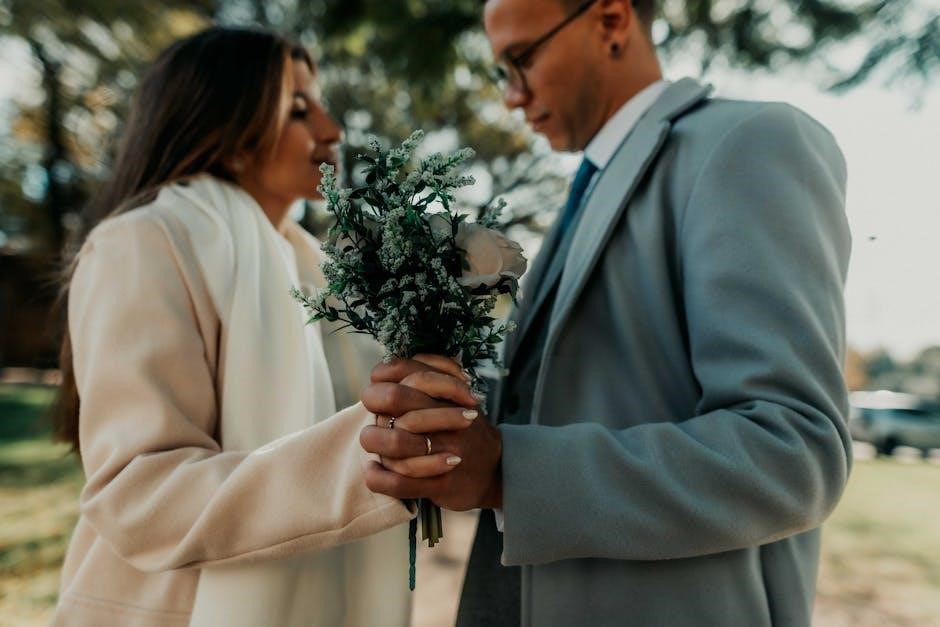
The Exchange of Rings is a visually symbolic act within the Evangelical Christian wedding ceremony, representing the unending and unbroken commitment between the bride and groom. Circular in shape, the ring signifies eternity – a love without beginning or end, mirroring God’s eternal love for humanity. As the rings are placed on each other’s fingers, the couple declares their acceptance of one another’s love and devotion.
Often accompanied by specific vows relating to the ring itself, this moment emphasizes faithfulness and the promise of a lasting union. The rings serve as a constant, tangible reminder of the vows exchanged, and the enduring bond forged before God and their community, symbolizing a sacred and unbreakable covenant.
Pronouncement of Marriage
The Pronouncement of Marriage is a pivotal moment, formally declaring the couple husband and wife, blessed by God and recognized within the Christian community. Typically delivered by the officiating pastor, this declaration signifies the legal and spiritual uniting of two individuals into one. It’s a solemn and joyful affirmation of their commitment, publicly acknowledging their new status as a married couple.
The pastor often uses specific wording rooted in biblical principles, emphasizing the sacredness of marriage as a reflection of Christ’s relationship with the Church. This pronouncement isn’t merely a formality; it’s a divine decree, bestowing God’s favor and protection upon their union, establishing a covenant built on faith and love.
The Kiss
The Kiss, following the pronouncement of marriage, serves as a celebratory seal upon the couple’s vows and a public expression of their newfound love and unity. It’s a deeply symbolic gesture, representing intimacy, affection, and the fulfillment of their commitment before God and their witnesses. While not explicitly mandated in scripture, it has become a cherished tradition within Christian wedding ceremonies.
This moment often elicits joyful applause from guests, marking the culmination of the ceremony and the beginning of their life together. The kiss signifies a transition from promise to possession, a physical manifestation of the spiritual bond they’ve established. It’s a beautiful and tender expression of their love, witnessed and blessed by all present.

Specific Ceremony Elements
Ceremony elements like the unity candle, sand ceremony, or cord of three strands visually represent the blending of lives and God’s unifying presence.
Unity Candle Ceremony
The Unity Candle Ceremony is a deeply symbolic tradition frequently incorporated into Evangelical Christian weddings. Typically, the couple each light individual candles, representing their individual lives and faiths before marriage.
Together, they use these flames to light a larger, central candle – the unity candle – symbolizing the joining of their two lives into one, unified by their shared love and commitment, and most importantly, by their faith in God.
This act visually represents the couple’s blending of families, backgrounds, and futures, all illuminated by the guiding light of Christ. It’s a beautiful and poignant moment, often accompanied by meaningful music and heartfelt prayers, emphasizing the sacredness of the marital bond.
Sand Ceremony
The Sand Ceremony presents a visually striking and symbolic alternative or addition to the Unity Candle, gaining popularity in Evangelical Christian weddings. The couple each pour different colored sands into a single vessel, representing their individual identities, experiences, and families.
As the sands mingle, they create a beautiful, layered design, illustrating how their lives intertwine and become inseparable. This blending symbolizes the creation of a new, shared life, built upon a foundation of love, trust, and faith.
Importantly, the grains of sand can never be fully separated, mirroring the permanence and enduring nature of the marital covenant before God. It’s a powerful visual metaphor for unity and commitment.
Cord of Three Strands
The Cord of Three Strands ceremony is a deeply meaningful tradition rooted in Ecclesiastes 4:12, a verse frequently incorporated into Evangelical Christian weddings. This symbolic act visually represents the joining of two lives with God as the unifying force.
Typically, three strands – often braided together by the couple – symbolize the husband, the wife, and God. As the strands are interwoven, they become stronger and more resilient than any single strand alone.
This illustrates that a marriage grounded in faith, with God at its center, is far more durable and capable of weathering life’s challenges. The braiding itself signifies the couple’s commitment to building a life together, intertwined with their shared faith.
Prayer of Blessing
The Prayer of Blessing is a pivotal moment in an Evangelical Christian wedding, serving as a heartfelt invocation of God’s grace and guidance upon the newly married couple. Typically delivered by the pastor or a designated spiritual leader, this prayer seeks divine favor for their journey together.
It often includes petitions for love, understanding, patience, and faithfulness, asking God to strengthen their bond and protect their marriage. The prayer acknowledges God as the author of marriage and the source of enduring love.
Many blessings specifically request God’s provision, wisdom, and protection as they navigate life’s joys and challenges, establishing a foundation of faith for their future.
Post-Ceremony and Reception
Post-ceremony traditions include a joyful recessional, a blessing offered over the reception, and the couple’s symbolic first dance, celebrating their union.
Recessional
The recessional marks the jubilant conclusion of the wedding ceremony, symbolizing the couple’s joyful entrance into their new life together. Traditionally, the newly married couple leads the procession down the aisle, followed by the wedding party – bridesmaids and groomsmen – in pairs.
Music for the recessional is typically upbeat and celebratory, reflecting the happiness of the occasion. Carefully selected hymns or contemporary Christian songs can enhance the joyful atmosphere. The pastor and other members of the clergy usually follow the wedding party, offering final blessings and well wishes to the couple and guests.
It’s important to coordinate the recessional order beforehand to ensure a smooth and orderly exit. Ushers can assist in directing guests to exit after the wedding party has passed, creating a celebratory and organized departure from the ceremony venue.
Reception Blessing
The reception blessing is a significant moment, transitioning the celebration from the sacred ceremony to a joyful feast. Typically delivered by the pastor or a designated spiritual leader, this prayer expresses gratitude for the newly married couple and asks for God’s continued blessing upon their union.
The blessing often acknowledges the importance of faith, love, and commitment in marriage, seeking divine guidance and protection for the couple’s future. It’s a time for heartfelt prayer and a public declaration of faith within the context of the wedding celebration.
This blessing sets a tone of reverence and gratitude for the reception, reminding guests of the spiritual foundation of the marriage. It’s a beautiful way to integrate faith into every aspect of the wedding day.

First Dance
The first dance, while not explicitly a religious component, often holds symbolic meaning within an Evangelical Christian wedding reception. It represents the couple’s first steps together as husband and wife, a visual expression of their unity and commitment before family and friends.
Many couples choose a song with lyrics that reflect their faith or their love for one another, enhancing the spiritual significance of the moment. It’s a beautiful opportunity to showcase their personality and connection.
While the song selection is personal, maintaining a level of reverence and appropriateness is often considered, aligning with the overall tone of a Christian celebration. It’s a cherished memory and a joyful start to their life together.

Resources and Guides for Ministers
Ministers benefit from checklists, sample scripts, and understanding legal requirements within Evangelical Christian wedding manuals for seamless ceremony planning.
Wedding Checklists
Comprehensive wedding checklists within Evangelical Christian manuals are essential tools for ministers, ensuring no crucial detail is overlooked during preparation. These lists typically begin months in advance, covering initial meetings with the couple to discuss doctrinal beliefs and expectations for the ceremony.
Further items include securing the date, booking the venue, coordinating with musicians for worship through hymns and contemporary Christian songs, and finalizing the order of service. Checklists also detail necessary legal documentation, confirming marriage license acquisition and witness arrangements.
Closer to the wedding date, checklists focus on ceremony-specific elements like the unity candle, sand ceremony, or cord of three strands, alongside finalizing scripture readings – often from passages like Corinthians – and preparing the pronouncement of marriage. Post-ceremony tasks, such as the recessional and reception blessing, are also included, providing a complete organizational framework.
Sample Ceremony Scripts
Evangelical Christian wedding manuals frequently include sample ceremony scripts, serving as foundational templates for ministers to personalize. These scripts typically begin with a processional and welcome, followed by an invocation and opening prayer, establishing a reverent atmosphere.
Core elements like scripture readings – often featuring passages from Corinthians – declarations of intent, and the heartfelt exchange of vows are meticulously outlined. Scripts also detail the symbolic exchange of rings and the solemn pronouncement of marriage, culminating in the celebratory kiss.
Many scripts offer options for incorporating specific ceremony elements, such as the unity candle, sand ceremony, or cord of three strands, alongside a concluding prayer of blessing. These samples, like those from American Marriage Ministries, provide a starting point, encouraging ministers to tailor the ceremony to reflect the couple’s unique faith journey and love story.
Legal Requirements for Marriage
Evangelical Christian wedding manuals acknowledge that while the ceremony is deeply spiritual, legal compliance is essential for a valid marriage. Ministers are guided to ensure couples understand and fulfill all jurisdictional requirements before the ceremony.
This includes obtaining a marriage license from the appropriate county or state office, verifying identification, and understanding waiting periods or premarital education mandates. Manuals often emphasize the importance of witnessing and properly signing the marriage license after the ceremony.
Furthermore, they may include links or resources to state-specific legal information. It’s crucial that the officiant confirms the couple has met all legal prerequisites, as a failure to do so can render the marriage legally unrecognized, despite its spiritual significance. Proper documentation safeguards the couple’s rights and future.